Warframe

Warframe

I’ll admit, I wasn’t entirely sold on Warframe at first glance. It was yet one more free to play FPS in a veritable sea of titles plagued by pay-walls, poor gameplay, terrible graphics and unscrupulous developers. In short, I wasn’t really all that interested in checking it out. I’m willing to own up to my mistakes.

A week or two ago, I noticed one of my Steam friends playing the title – and that they’d been playing it fairly frequently for some time. I decided it couldn’t hurt to drop them a line – to ask them what they thought of the game. They sung the game’s praises quite highly, and I figured I might as well give it a fair shake. After all, it was free. What did I possibly have to lose?

Only several hours of time where I could have been doing something productive, but instead wound up shooting down angry mutant space marines and robots. So…yeah. It’s pretty damned fun.

The basic story of Warframe isn’t really anything special; basic, standard space opera fare:

You are an ancient warrior equipped with a powerful and ancient suit of armor -a titular Warframe – and preserved for centuries in cryogenic sleep. You’ve recently been awakened to a solar system completely unfamiliar to you, in which a terrible war is being waged. The brutish clone armies of the Grineer, suffering from centuries of genetic degeneration, try to exert their will over the galaxy, vast armies of monstrosities infected by the Technocyte plague consume everything in their path, and the merchant cabals of the Corprus remain indifferent to pretty much the whole conflict, so long as they can make a profit.

As one of the Tenno – the faction to which all players belong – your job is to wipe out the lot of ’em, restoring peace to the galaxy (presumably).

After a brief tutorial, you’ll dive headlong into your first mission; destroying the power generator on a Grineer ship. Here’s where the MMO component of Warframe comes in: missions are designed primarily around four-played co-op, and if you simply hop into a mission and start playing, there’s a good chance at least a few people might actually join your game. Of course, there’s also a good chance they won’t, and you’ll be in for a thoroughly frustrating experience trying to force your way through a mission designed for multiple people. There’s also a marketplace, clan system, and friends list, as well; though curiously enough, although I installed the game through Steam, the list is entirely independent of the client.

The multiplayer component is actually where Warframe encounters the most trouble – odd, for a game designed around four-player co-operative play. Level ranges of planets in the solar system aren’t shown, so finding somewhere appropriate to your level involves a lot of guesswork; there aren’t any latency indicators, either. What’s more, games in progress don’t show the relative level of players. I actually wound up with a player more than ten levels higher than me on an assassination mission (basically, a boss fight). To my knowledge, bosses scale with level.

That was a fun fight.

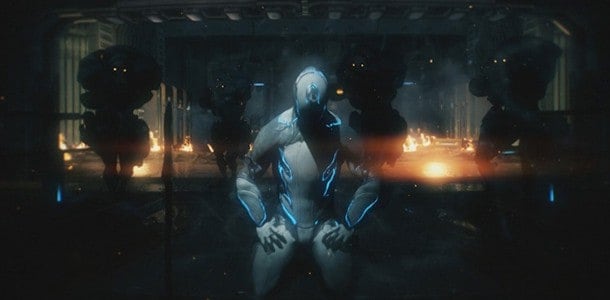
Matchmaking quirks and minor bugs aside, though, there’s an extremely solid game here. Combat is incredibly fun and fast-paced; you actually feel like some sort of space Ninja as you jump and run off walls, slash through hordes of enemies with your blade and gun down even more from a distance. Though it’s somewhat curious that there aren’t really any grenades (or explosives), that’s sort of offset by the fact that each Warframe has its own unique abilities. I went with Loki, a frame which is all about stealth. Other Warframes include Excalibur (specialized for sword combat), Nyx (who messes enemies up with psychic powers) and Volt (one word: zap).

All of this is underscored by an intense customization system, which allows you to equip your Warframe and weapons with augments that serve a wide array of different purposes such as granting special abilities, adding bonus damage or increasing your health/shields. You can also hop into the foundry and use your accumulated resources, drops, and credits to build powerful equipment from blueprints both found in missions and bought in the marketplace.

Of course, like any free to play, there’s a cash store. While there are a few benefits that definitely smack of pay to win (Sentinels, for example, are incredibly powerful), most of what’s is either stuff that can be unlocked by grinding or boosts that make it easier to grind.

Warframe is a well-made, entertaining MMOFPS which definitely has some decent chops even though it’s still in open beta. Even in spite of the other faults, the combat here really shines through. Give Warframe a try, if for nothing other than that.
Firefall

Firefall

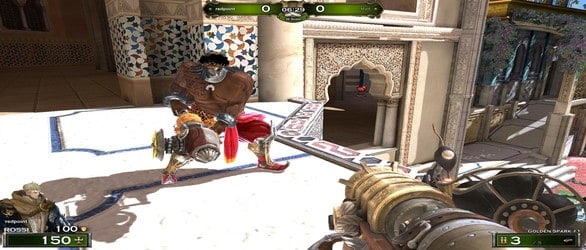
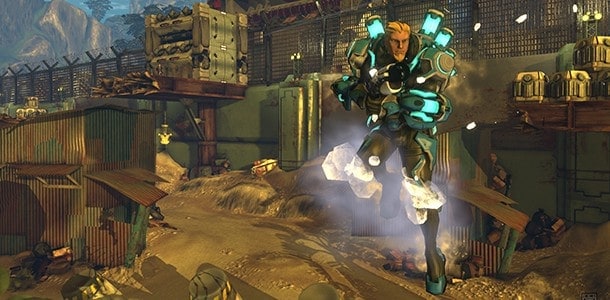
Firefall is a legend, probably not for the right thing, it has been in beta forever. That means this F2P MMO Shooter is essentially a pay to play game. However, what people should be talking about is it?s gameplay. A sprawling open world built to 1/10th the scale of Earth awaits players when they get into the world. These vast open worlds are made for large scale battles with 100 or so players combining forces to take on quests, mine, craft and partake in one of the most unique MMO experiences to date.

Although there is a ton of players in every Firefall server, the different battle frames makes every player unique. Instead of splitting people up by classes Firefall chooses a different option. Every player picks a battle frame and equips mod items like equipping parts on a car. This give players a ton of choice to play how they choose.

On top of equipping parts to a battle frame, players can also choose different tiers of skills. Doing different actions in PvE and PvP grants players experience points. These experience points unlock horizontal choices along a tree for different upgrades. The best thing about the tiered upgrading is the way it works in PvP. The tracks allow for character progression while at the same time not leaving anyone at a disadvantage.

Speaking of PvP, Firefall features one of the most dynamic PvP experience for players. Want to stream your game? Want to play with large numbers? Firefall has both of these things covered. Red 5 Studios, working with West Coast Customs has built a mobile gaming station that will host up to 3000 player LAN parties across the United States to show off the massive battlefields players can expect when the game goes live.

A large world with unlimited possibilities awaits for players of Firefall. As soon as this game comes out of beta it will be an unstoppable force in the gaming community. Red 5 Studios has captured the heart of everyone in the MMO FPS category. Check out this game today!

Dragon City

[review]
[list]
[stat=Publisher]SocialPoint[/stat]
[stat=Developer]SocialPoint[/stat]
[stat=Genre]Strategy[/stat]
[stat=Distribution]Facebook[/stat]
[stat=Graphics]Medium[/stat]
[stat=PvP]Yes[/stat]
[stat=Free to Play]Yes[/stat]
[stat=Download Size]NA[/stat]
[/list]
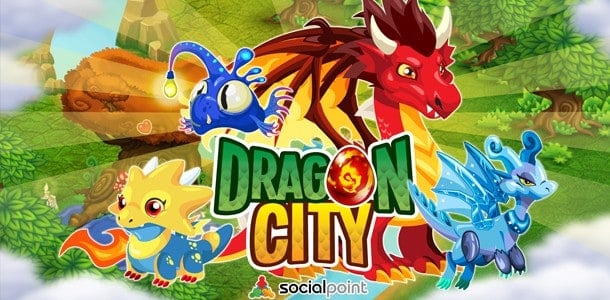
[/review]Dragon City is a Facebook-based social game with the theme around dragon breeding, hatching and fighting. The game is developed by popular Facebook game developer Social Point.

The game is played like many of the games released by Social Point. In Dragon City you will start on a magical dragon island where you create dragons in your hatchery. While you grow your dragons you will earn gold by placing them in certain habitats. One of the more interesting and unique parts of the game is breeding your dragons. You can create all sorts of different combinations by breeding a fire dragon with a water dragon for instance. Then you can take your dragons and duke it out in PvP battles against your friends and rivals.

The gameplay is similar to what you would find in other Facebook games like Farmville. You can visit your friends Dragon cities and level up your dragons by completing chores and tasks. Thre is no energy bar, so you can play the game as much as you like without having to wait after doing a bunch of things around your city.

We Need To Talk About Gaming Part 2 – Tough Love

Why do we need to talk about gaming?  Because it’s an insanely young industry compared to TV and Movies and Books and etc.  The culture surrounding games is awful, let’s fix it.
We Need To Talk About Gaming is from MMO ATK Contributor Joe – http://www.youtube.com/user/joeplork
Get Social find us on:
We Need To Talk About Gaming  Part 1 – http://youtu.be/t_ES4J7XhBc

We Need To Talk About Gaming Part 1 – Tough Love

Why do we need to talk about gaming?  Because it’s an insanely young industry compared to TV and Movies and Books and etc.  The culture surrounding games is awful, let’s fix it.
We Need To Talk About Gaming is from MMO ATK Contributor Joe – http://www.youtube.com/user/joeplork
Get Social find us on:
We Need To Talk About Gaming Part 2 – http://youtu.be/0DCgzVtsE7k

Age of Wushu

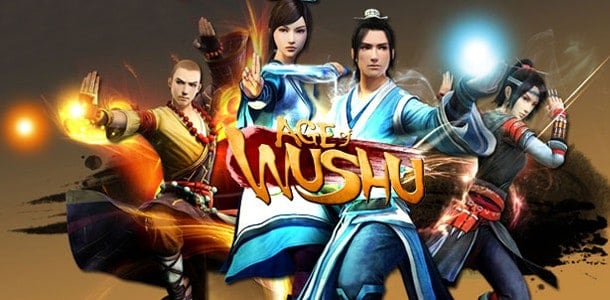
Age of Wushu is a free to play Fantasy MMORPG loosely based on the Ming Dynasty Period; Age of Wushu draws heavy inspiration from the Wuxia genre of Chinese fiction: while you’re not going to be fighting off dragons or demons, you will find yourself running across water, scaling buildings, and even exercising a bit of limited flight. See, that’s the first area in which Age of Wushu distinguishes itself: the combat system.

In order to fully understand combat, you’ll first need to understand the game’s class system; or rather, it’s lack of one. Age of Wushu tosses the idea of rigid, pre-set roles and classes out the window. Instead, each character can join one of the game’s eight Schools. Each school has its own martial style and skill-set, and laws by which each player needs to abide: these laws can include profession, inventory, and alcohol intake, among other things. Coupled with this, each school has a special internal skill which impacts your characters personal stats and abilities. The best part about this system is that you’re not locked into any particular school.

Read our Full Age of Wushu Review.
The game is available to play for free and will definitely become one of our favorite MMORPGs in 2013!